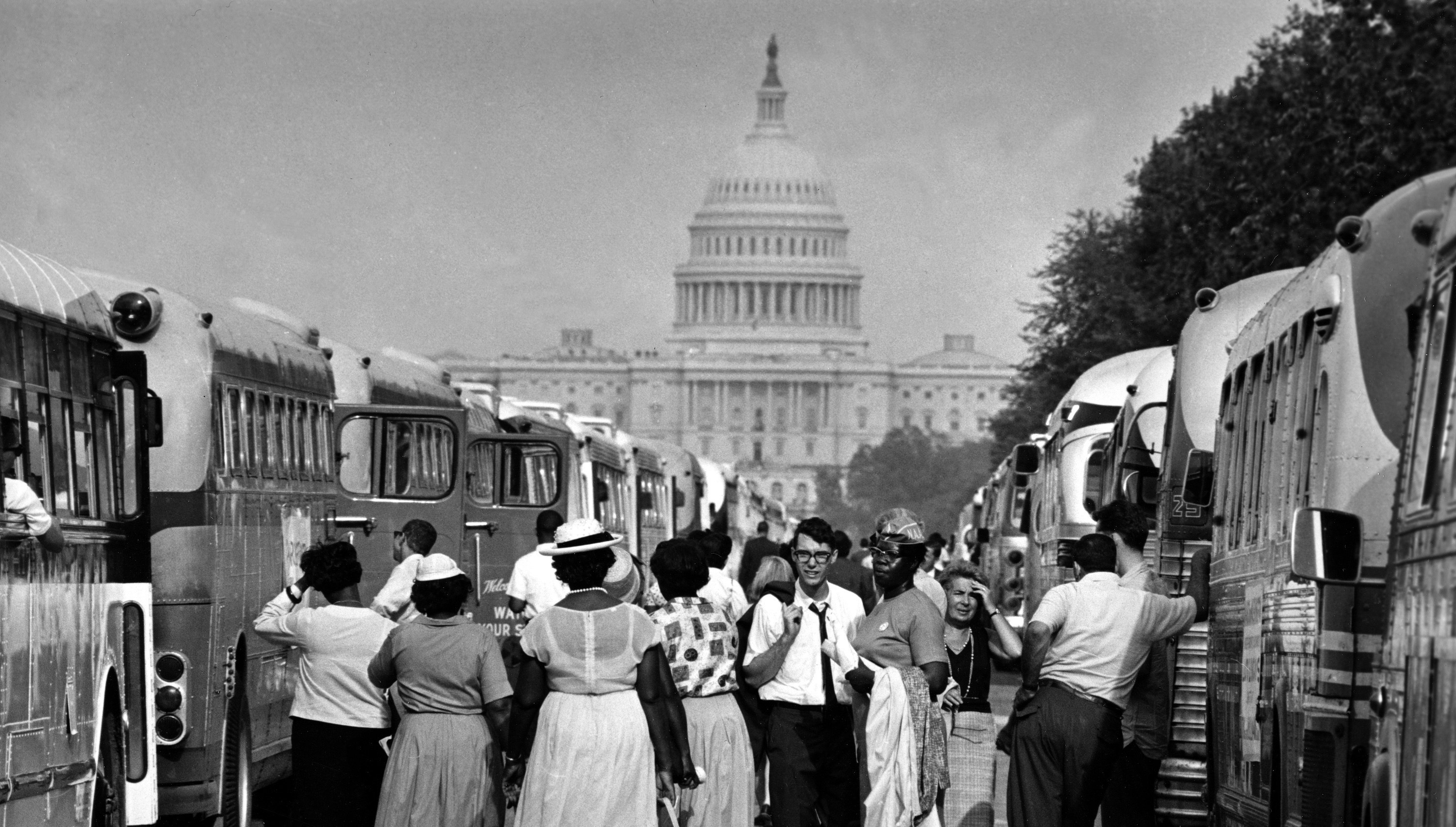
Descrizione: Il 28 agosto del 1963 Martin Luther King, davanti al Lincoln Memorial di Washington, tenne un discorso diventato famoso per la celebre frase “I have a dream”, al termine di una marcia di protesta per i diritti civili conosciuta come “La marcia su Washington”. Con le sue parole Martin Luther King voleva diffondere la speranza che, prima o poi, gli uomini di colore avrebbero avuto gli stessi diritti dei bianchi. Questo discorso divenne il simbolo della lotta contro il razzismo negli Stati Uniti.
Description: On 28th August 1963 Martin Luther King, in front of the Lincoln Memorial of Washington, pronunced a speech become famous thanks to the popular sentence “I have a dream”, at the end of a protest march for the civil rights known as “March on Washington”. With his words Martin Luther King wanted to spread the hope that, sooner or later, black men would have had the same rights as white people. This speech became the symbol of the struggle against racism in the USA.
Descrizione: Mercoledì 28 agosto 1963, a Washington, ebbe luogo una grande manifestazione politica a sostegno dei diritti civili ed economici per gli uomini di colore. Martin Luther King, durante quest’evento, pronunciò un famoso discorso con lo scopo di dichiarare la fine del razzismo e stabilire la pace tra bianchi e neri. La marcia fu organizzata dai rappresentanti di una organizzazione a favore dei diritti civili e del lavoro che si unì ad alcune organizzazioni religiose.
Description: On Wednesday 28th august 1963, in Washington, a huge political manifestation took place to support the civil and economic rights of black men. Martin Luther king, during this event, pronounced a famous speech with the purpose to declare the end of the racism and set peace among white and black people. The march was organized by rapresentatives of an organization in favour of civil rights and of the work that joined some religious organizations.
Descrizione: La foto ritrae alcuni partecipanti alla Marcia su Washington. Questa viene ricordata come una grande manifestazione politica a sostegno dei diritti civili ed economici per gli afroamericani. Nonostante ciò la foto vede come protagonisti anche alcuni manifestanti non di colore. Si stima infatti che il 75-80% dei manifestanti fossero neri mentre il resto era costituita da bianchi o altre minoranze. Ricordiamo inoltre che uno dei punti cardinali del celebre discorso del leader afro-americano Martin Luther King Jr. era la pace tra i bianchi e i neri.
Description: The photo shows some participants in the March on Washington. This is remembered as a great political demonstration in support of civil and economic rights for African Americans. Despite this, in the photo there are also some non-black protesters. It is estimated that 75-80% of the protesters were black while the rest consisted of whites or other minorities. Infact, one of the cardinal points of the famous speech by the African-American leader Martin Luther King Jr. was peace between whites and blacks.
Descrizione: Mario Savio fu un attivista politico statunitense, di origini italiane, leader del movimento studentesco Free Speech Movement che si sviluppò nell’autunno del 1964 all’Università della California, Berkeley. In quegli anni nel resto degli Stati Uniti cominciavano a formarsi altri movimenti simili in difesa dei diritti dei neri e come forma di protesta contro il governo per il coinvolgimento nella guerra in Vietnam. La foto mostra Savio che parla con un altro studente di fronte a Sproul Hall. L’altro studente sta tenendo un cartello che dice “Questo campus è in sciopero per la libertà di parola”.
Description: Mario Savio was an American political activist, with Italian origin, leader of the Free speech Movement student, a movement developed in autumn 1964 at the University of California, Berkeley. In those years other similar movements began to form in the rest of the United States in defence of black rights and as a form of protest against the government for its involvement in the war in Vietnam. The photo shows Savio talking to another student in front of sproul Hall. The other student is holding a sign that says “This campus is on strike for the freedom of word”.
Descrizione: Nel 1964, nel campus dell’Università di California, Berkeley, nacque un movimento di protesta studentesco, il Free Speech Movement (FSM), guidato da diversi studenti, tra cui l’attivista Mario Savio. Gli studenti volevano che l’università gli riconoscesse il diritto alla libertà di espressione e alla libertà accademica e che gli concedesse di praticare attività politica all’interno del campus.
Description: In 1964, in the campus of University of California, Berkeley, a students movement of protest was born, the Free Speech Movement (FMS), led by various students, such as the activist Mario Savio. Students wanted that the University gave them the right to freedom of expression and the academic freedom and that it granted them to practice political activity inside the campus.
Titolo: Rosa Parks baciata dalla moglie di MLK Coretta Scott King
Anno: 14 Gennaio 1980
Descrizione: Rosa Parks, a destra, viene baciata da Coretta Scott King. Quando Parks venne arrestata a Montgomery nel 1955, non si era seduta nella parte bianca del bus, ma in quella intermedia di separazione delle razze, che veniva occupata solo quando il bus era molto affollato. L’autista le ordinò comunque di alzarsi per cedere il posto ad un uomo bianco, Rosa rifiutò, venne imprigionata e liberata la sera stessa grazie alla cauzione pagata da un avvocato bianco antirazzista. Intorno alla vicenda di Rosa si creò una mobilitazione della comunità nera: 40mila persone fra chiese, associazioni, donne di ogni estrazione sociale. Il 5 dicembre, giorno del processo, in un’affollata assemblea tenuta in chiesa, alla Parks non venne data la parola ma fu Martin Luther King a sottolineare la sua reputazione di buona cittadina.
Description: Rosa Parks, on the right, is kissed by Coretta Scott King. When Parks was arrested in Montgomery in 1955, she did not sit in the white part of the bus, but in the intermediate part of race separation, which was occupied only when the bus was very busy. The chauffeur, however, ordered her to stand up to give her place to a white man, Rosa refused, was imprisoned and freed the same evening thanks to the bail paid by a white anti-racist lawyer. Around Rosa, a mobilization of the black community was created: 40,000 people among churches, associations, women of every social background. On December 5, the day of the trial, in a crowded church assembly, Parks was not given the floor but it was Martin Luther King who emphasized his reputation as a good citizen.
Descrizione: La marcia su Washington per il lavoro e la libertà (o la grande marcia su Washington) è stata una grande manifestazione politica a sostegno dei diritti civili ed economici per gli afroamericani che ebbe luogo mercoledì 28 agosto 1963 a Washington durante la presidenza di John Fitzgerald Kennedy. In quest’occasione, il leader afro-americano Martin Luther King Jr. pronunciò al Lincoln Memorial il suo storico discorso “I have a dream”, invocando la fine del razzismo e la pace tra bianchi e neri. La marcia fu organizzata da A. Philip Randolph e Bayard Rustin, che costituirono una coalizione per il sostegno dei diritti civili e del lavoro insieme ad organizzazioni religiose, che si unirono sotto il tema di lavoro e libertà.
Description: The march on Washington for the work and the freedom(or the great march on Washington) was a big political demostration in support of the afro-americans civil and economic rights that took place on Wednesday 28th August 1963 in Washington,during J.F. Kennedy’s presidency. In this occasion, the afro-american leader Martin Luther King pronunced at the Lincoln Memorial his historical speech “I have a dream”,calling upon the end of racism and the peace between white and black-skinned people. The march was organized by A.P. Randolph and B.Rustin,who built up a coalition for the support of the civil rights and the work along with religious organizations, that joined themselves for the theme of the work and the liberty.
Descrizione: In questa immagine, alcuni membri del movimento afroamericano Black Panther manifestano davanti al Criminal Courts Building di New York, un mese dopo che 21 Panthers (venivano così chiamati i relativi membri) erano stati accusati di aver organizzato un complotto contro una stazione di polizia e di essersi opposti al mancato diritto di accesso alle ferrovie. Tale manifestazione faceva parte dei tanti programmi sociali del movimento rivolti alla comunità.
Description: In this photo, some members of the Afro-American movement Black Panther demonstrate nearby the Criminal Courts Building of New York, a month after 21 Panthers were charged with plotting to a police station and to have opposed to the railroad right-of-way. This demonstration was a part of many social programs of the movement directed to the community.
Descrizione: Era il 16 ottobre 1968 quando alle olimpiadi di città del Messico due afroamericani salgono sul podio e alzano al cielo pugni in guanti neri. Quest’azione era simbolo del Black Power ovvero il movimento di liberazione degli afroamericani fino ad allora discriminati socialmente, politicamente e legislativamente.
Description: It was in October 16th 1968 when the Olympic Games of Mexico city lifted up the trophy two Afro-Americans who raised their punchs towerds the sky with black gloves. This gesture was symbol of the Black Power, that is the movement of liberation of afro-americans who were, until then, discriminated in a serial, political and legislative way.
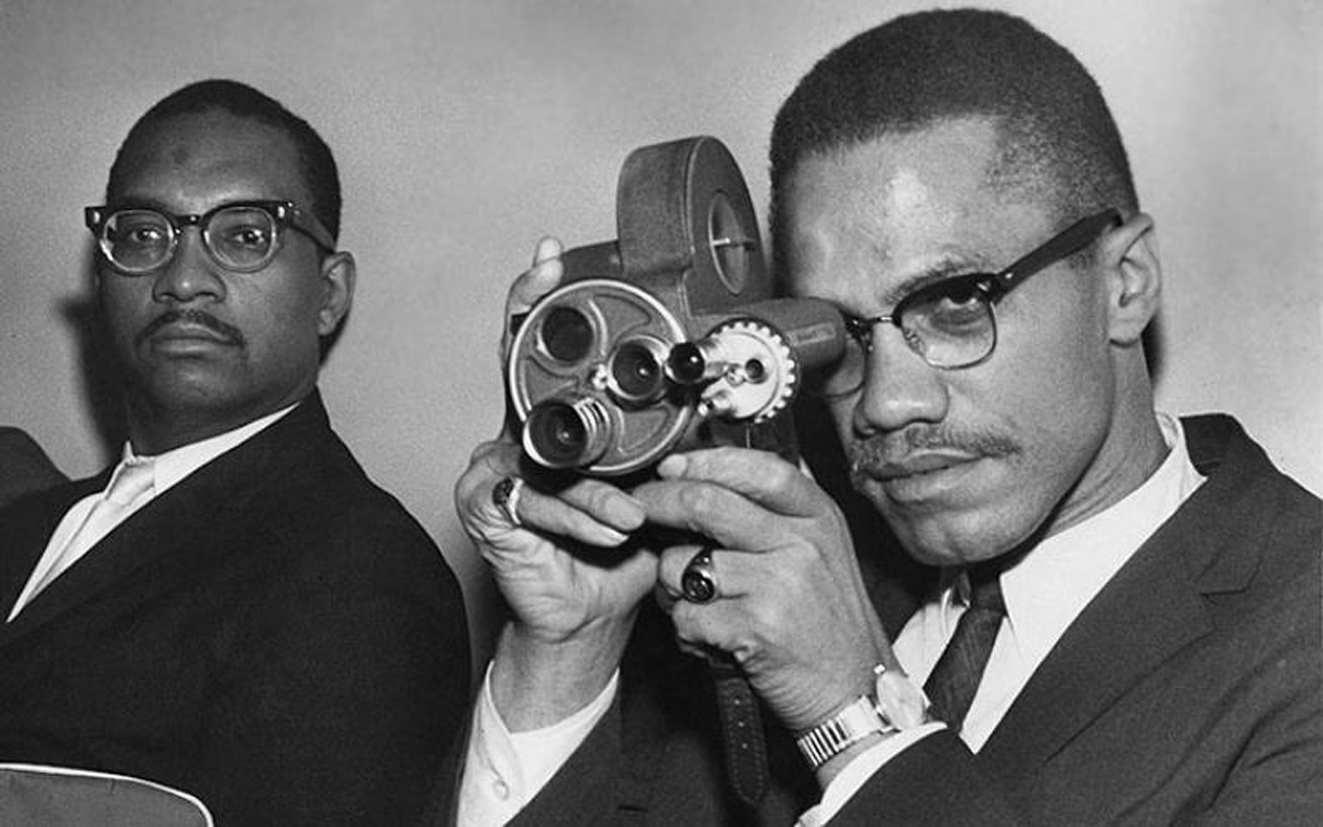
Descrizione: Malcolm X era un leader dei diritti civili, un portavoce della Nation of Islam e un importante nazionalista nero nei primi anni ’60. Considerando l’integrazione come una soluzione illusoria ai problemi dei neri americani, Malcolm X sosteneva l’autosufficienza, l’orgoglio nero e l’unità. Il messaggio di Malcolm divenne popolare tra i neri del nord, poiché il movimento per i diritti civili non riuscì ad alleviare problemi come la povertà, la disoccupazione, la brutalità della polizia e la segregazione di fatto. Sebbene molti bianchi del Nord si sentissero a disagio nel confrontare le disuguaglianze razziali vicino a casa, le condizioni per gli afroamericani che vivevano nelle città del nord e dell’ovest si rivaleggiavano con quelle del sud. Nel 1962 il Dipartimento di Polizia di Los Angeles, famoso nella sezione di Watts di Los Angeles per molestare e brutalizzare i giovani neri, prese di mira il Nation of Islam.
Description: Malcolm X was a civil rights leader, a spokesperson for the Nation of Islam, and a leading black nationalist during the early 1960’s. Viewing integration as an illusory solution to the problems of black Americans, Malcolm X advocated self-reliance, black pride, and unity. Malcolm’s message became popular among Northern blacks as the Civil Rights movement failed to alleviate problems such as poverty, joblessness, police brutality, and de facto segregation. Although many Northern whites felt uncomfortable confronting racial inequities close to home, conditions for African Americans living in Northern and Western cities rivaled those of the South. In 1962 the Los Angeles Police Department, notorious in the Watts section of L.A. for harassing and brutalizing black youth, targeted the Nation of Islam in an act of violence.




 I Mille Volti del '68