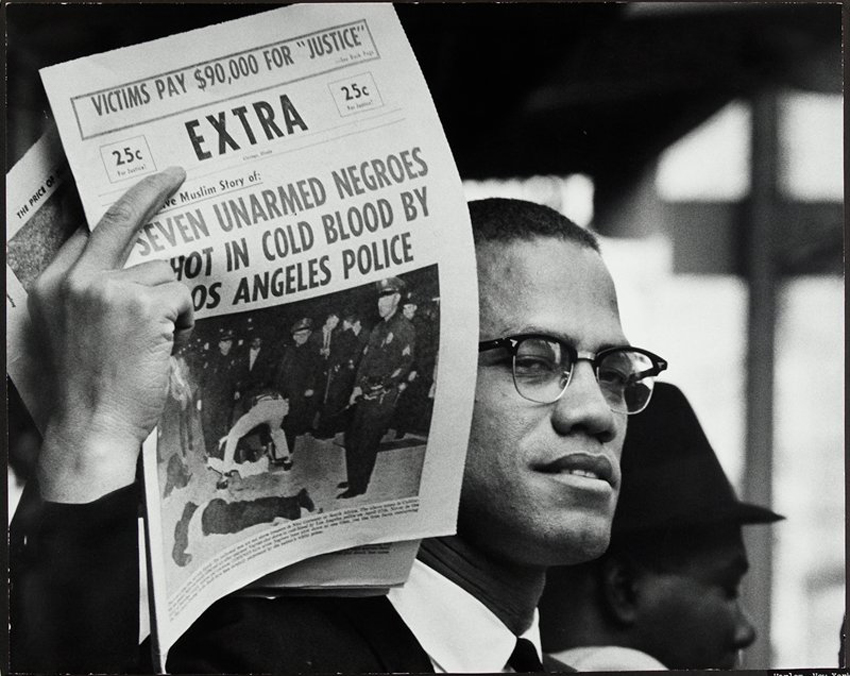
#009

Segregazione Razziale

Autore: sconosciuto

Luogo: sconosciuto

Titolo: Malcolm X

Anno: sconosciuto

Descrizione: Il nome di battesimo di Malcolm X è Malcolm Little. Lo cambiò perché considerava quel “Little” un cognome da schiavi. In America infatti gli schiavi prendevano il cognome dai propri padroni, come era avvenuto per i suoi antenati. Per questo scelse la X: perché non significa nulla. Malcolm X è stato uno dei leader politici afroamericani che ha “lottato” contro la segregazione razziale. Era membro della Nation of Islam, movimento afroamericano definitosi “setta islamica militante”.  Durante un comizio a New York, il 21 febbraio del 1965, viene brutalmente assassinato da tre membri della Nation of Islam ma c’è ancora molto da chiarire su quel delitto. L’FBI ad esempio pare sapesse tutto ma non fece nulla per evitarlo.

Description: Malcolm X’s name is Malcolm Little. He changed it because he considered that word “Little” a slave surname. In the USA infact, slaves took their masters’ surname,as it was happened for his ancestors. For this reason he choose the letter “X”:because it doesn’t mean anything.     Malcolm X has been one of afro-american political leaders, who fought against the jim crav. He was a member of the Nation of Islam,an afro-amreican movement,that introduced itself as a “ militant islamic seet”. During a meeting in New York,on February 21st 1965, he got brutally murdered by three members of the Nation of Islam, but there is still a lot to clarify about that crime. As it seems, the FBI, for instance, knew everything even if it didn’t do anything to avoid it.

#008

Segregazione Razziale

Autore: Stephen F. Somerstein

Luogo: Montgomery, Alabama

Titolo: sconosciuto

Anno: 25 Marzo 1965

Descrizione: In questa foto viene rappresentato Martin Luther King Jr. di spalle che parla dinanzi a 25.000 manifestanti per i diritti civili, alla conclusione della marcia di Selma, guidata da lui stesso. Questo discorso si svolse a Montgomery, davanti al palazzo della capitale dello stato dell’Alabama. M. L. K. Jr., seguendo le orme di suo padre (Martin Luther King Senior), fu un pastore protestante, politico e attivista statunitense, leader del movimento per i diritti civili degli afroamericani. Il suo impegno civile venne premiato nel 1964 con il premio Nobel per la pace, con il “Martin Luther King Day”, celebrato il terzo lunedì di Gennaio, e con altri riconoscimenti postumi.

Description: This photo shows Martin Luther King Jr. from the back, who speaks in front of 25.000 civil rights protestors at the end of Selma March, led by his own. This speech took place in Montgomery, near the palace of the capital city of Alabama. M. L. K. Jr., following his father traces, was a protestant pastor, politician, American activist, leader of the mouvement of Afroamerican civil rights. His commitment was rewarded in 1964 with the Nobel Peace Prize, with the “Martin Luther Ling Day”, celebrated on the third Monday of January, and with other posthumous awards. 

#007

Segregazione Razziale

Autore: Getty images

Luogo: Atlanta, Georgia

Titolo: sconosciuto

Anno: 27 Aprile 1960

Descrizione: In questa foto viene rappresentato Martin Luther King Jr. con in braccio il figlio di soli due anni Martin Luther King III, nel momento in cui ritrova una croce bruciata nel giardino della sua casa ad Atlanta, in Georgia. La croce ardente è uno dei simboli caratteristici del Ku Klux Klan. Fu introdotta da William J. Simmons, secondo fondatore dell’organizzazione nel 1915, che si sarebbe ispirato ad alcune tradizioni scozzesi. 
Da allora fu ampiamente utilizzata nelle riunioni dei Klansmen e come simbolo di terrore con cui spaventare i nemici del KKK. Evidentemente, però, la croce bruciata non bastò a fermare il reverendo King che continuò a combattere la segregazione e la discriminazione razziale fino al suo assassinio, nel 1968.

Description: This photo shows Martin Luther King Jr. with his two years old son, Martin Luther King III, when he found a burned cross in the garden of his house in Atlanta, Georgia. The burned cross is one of the symbols of Ku Klux Klan. It was introduced in 1915 by William J. Simmons, the second founder of the organization, who took inspiration by some Scottish traditions. Since that time, it was largely used in the Klansmen reunions and as a symbol of terror for the enemies of the KKK. However, the burned cross didn’t stop the Reverend King who continued to fight against the segregation and racial descrimination, until his murder in 1968.

#006

Segregazione Razziale

Autore: Flip Schulke

Luogo: Selma

Titolo: Marcia di Selma

Anno: 1965

Descrizione: Negli Stati Uniti tra il 1964 e il 1965 ci furono molte manifestazioni organizzate dal movimento dei diritti civili  ma dopo un incidente causato dalla polizia che provocò la morte di Jimmie Lee Jackson nell’ospedale di Selma e si decise di organizzare una marcia da qui a Montgomery. Lo scopo di questa marcia era quello di manifestare per istituire dei diritti a favore degli afroamericani.

Description: In the USA between 1964 and 1965, there were demonstraitions organized by civil rights movement, but after, an accident provoked by the police the die of Jimmie Lee in the hospital of Selma, so it was decided to organize a march from here to Montgomery. The purpose of this was to demonstrate to estabilish some rights on behalf of the afro-americans.

#005

Segregazione Razziale

Autore: sconosciuto

Luogo: Selma

Titolo: Marcia di Selma

Anno: 1965

Descrizione: La domenica del 21 Marzo 1965 circa diecimila persone organizzarono una marcia che si concluse il 24 Marzo a Montgomery dove Martin Luter King il giorno dopo nell’ultima tappa della marcia insieme a venticinquemila manifestanti sotto le gradinate del palazzo del Governatore tenne un discorso per mettere fine alle discriminazioni inflitte agli afroamericani.

Description: On Sunday 21 st March 1965 around ten thousand people organized a march that ended up on March 24 th in Montgomery where Martin Luter King, the day after, in the last stage of the march along with twenty five thousand protesters, under the steps of the palace of the Governor, held a peech to stop all the discriminations directed to the afro-americans.

#004

Segregazione Razziale

Autore: sconosciuto

Luogo: Montgomery

Titolo: Rosa Parks durante il suo arresto

Anno: 1 Dicembre 1955

Descrizione: Rosa Parks (1913-2005) fu arrestata  per non aver ceduto il posto sull’autobus a un bianco.  Era la sera del primo dicembre del 1955, quando, a Montgomery, Rosa Parks tornando a casa dal lavoro salì sull’autobus che era solita prendere. Ma quella sera non c’erano posti liberi tra quelli riservati ai neri e così andò a sedersi ad un sedile libero tra quelli comuni che potevano essere occupati sia da neri che da bianchi nel caso tutti fossero già occupati. Ma, tempo di qualche fermata, e montò sul pullman un uomo bianco al quale, secondo la fatidica legge in vigore, Rosa avrebbe dovuto lasciare il posto .Ma nulla, nemmeno bastarono le intimidazioni dell’’autista: Rosa non si alzò né lasciò il posto al bianco. L’autista chiamò allora la polizia e Rosa venne arrestata con l’accusa di “condotta impropria”. La sera stessa fu liberata grazie a una cauzione pagata da un avvocato bianco antirazzista. Il giorno dell’inizio del processo, su iniziativa di Jo Ann Robinson, un’altra donna nera che stampò e diffuse clandestinamente dei volantini grazie alla coalizione di donne attiviste della città, iniziò un boicottaggio dei mezzi pubblici da parte di tutta la comunità nera di Montgomery che smise di usarli per ben 381 giorni.

Per approfondire: https://it.wikipedia.org/wiki/Rosa_Parkshttp://docknetwork.blogspot.com/2018/08/donne-nel-mito-rosa-parks.html?spref=fb&m=1

Descrizione: Rosa Parks (1913-2005) was arrested for not giving up her seat on the bus to a white man. It was the night of December 1, 1955, when, in Montgomery, Rosa Parks came home from work on the bus she used to take. But that evening there were no vacancies among those reserved for blacks and so he went to sit in on a free seat among the common ones that could be occupied by both blacks and whites in case everyone was already occupied. But after a few stops, a white man was put on the bus to which, according to the law in force, Rosa should have left the place. But nothing, nor even the intimidation of the driver: Rosa did not get up nor gave way to the white. The driver then called the police and Rosa was arrested on charges of improper conduct. The same evening, she was released on bail by a white anti-racist lawyer. On the day of the start of the trial, on the initiative of Jo Ann Robinson, another black woman who illegally printed and disseminated leaflets thanks to the coalition of women activists in the city, began a boycott of public transport by the entire Montgomery black community that stopped using them for 381 days.

To know more: https://it.wikipedia.org/wiki/Rosa_Parks -http://docknetwork.blogspot.com/2018/08/donne-nel-mito-rosa-parks.html?fąfb&mspre1

#003

Segregazione Razziale

Autore: sconosciuto

Luogo: Alabama, Stati Uniti

Titolo: “Klansmen and Friends : A wish granted”

Anno: Dicembre 1948

Descrizione: La foto seguente raffigura un apparente spettacolo di carità da parte di alcuni membri del Ku Klux Klan che,assieme ad un altro membro travestito da Babbo Natale, regalano una radio all’ex schiavo 107enne Jack Riddle e sua moglie di 86 anni,entrambi di colore, per realizzare così il loro desiderio natalizio,ossia quello di far loro ascoltare le parole dei sacerdoti del Klan.La foto,scattata in Alabama,venne pubblicata sul giornale “National Affairs” e non è priva di interpretazioni sul suo significato.Da un lato simboleggia un ritorno a quel passato che il Klan definisce “glorioso”,in cui i neri americani venivano schiavizzati e i  loro connazionali bianchi potevano imporsi e fargli da padrone,dall’altro può essere intesa anche come una parodia: infatti l’idea che degli ex schiavi accettino dei klansmen (ovvero dei membri del KKK),è del tutto ironica,poiché in contrasto netto con le idee razziste dell’organizzazione segreta.

Per approfondire: https://www.youtube.com/watch?v=cnR49tAJ0IM

Description: The following picture portrays an apparent charity show by some members of the Ku Klux Klan who,along with another member disguised as Santa Claus,present a radio to a former 107 year-old slave Jack Riddle and his 86 yo wife,both black-skinned ,in order to make their Christmas wish come true,or rather to make them listen to the Klan preachers’ words.The photography,taken in Alabama,was published on the magazine “National Affairs” and it isn’t devoid of interpretations about its meaning.On the one hand it epitomizes a return to that past that the Klan itself defines “glorious”,in which black americans were enslaved and their white compatriots could impose and master them,on the other hand it might be considered also a parody:indeed the fact that some former slaves accept some klansmen,is totally ironic,since it is in full  contrast with the racist ideas of the KKK.

To know more: https://www.youtube.com/watch?v=cnR49tAJ0IM

#002

Segregazione Razziale

Autore: Jack Benton

Luogo: campagne del Tennessee, Stati Uniti

Titolo: sconosciuto

Anno: 1920(circa)

Descrizione: Nell’immagine soprastante viene raffigurata la cerimonia notturna di iniziazione del Ku Klux Klan.Un uomo si inginocchia di fronte ad un membro del Klan, presumibilmente il sacerdote, il quale attraverso appositi riti accompagnati da un calice, lo accoglie nell’organizzazione. Di fronte all’iniziato è possibile notare la croce ardente (introdotta da uno dei fondatori Simmons nel 1915, aveva la funzione di indurre al terrore), e la bandiera degli Stati Uniti d’America (simbolo chiaro di un marcato patriottismo). Gli altri membri invece, partecipano al tutto riuniti in cerchio, muniti delle classiche toghe con cappuccio bianco. L’iniziazione comprendeva un giuramento, che consisteva nella completo rispetto di 4 punti, che, contrariamente a ciò che viene scritto, sono tutt’altro che caritatevoli, e la totale perdita della propria identità.


Per approfondire: https://www.youtube.com/watch?v=KJR3C4A8myM

Description: In the image above is described the nighttime cerimony of initiation of the Ku Klux Klan. A man kneels in front of a member of the Klan,probably the priest,which, through particular rituals accompanied by a chalice, receives him into the organization.In front of the initiate we can notice the burning cross (introduced by one of the founders Simmons in 1915, it had the function to cause the terror),and the United States flag (a clear emblem of a strong patriotism).The other members instead, partecipate to the ceremony all along, gathered in a big circle, wearing the typical white hood and gown.The initiation included also an oath, that consisted in the complete abidance of 4 points, that, contrarily to what is usually written, aren not so charitable, and the full loss of one’s identity.

To know more: https://www.youtube.com/watch?v=KJR3C4A8myM

#001

Segregazione Razziale

Autore: Ian Berry

Luogo: Johannesburg, Sudafrica

Titolo: Baraccopoli a Johannesburg

Anno: 1961

Descrizione: In questa foto viene rappresentato un bambino a Soweto, un’area urbana della città di Johannesburg, in Sudafrica.  Il nome “Soweto” è una contrazione di “South Western Townships” (“township sudoccidentali”) ed indica la più grande township del Sudafrica, la quale ha avuto un ruolo fondamentale nella storia della lotta all’apartheid. Il 16 giugno del 1976, infatti, a Soweto, centinaia di studenti e studentesse che avevano organizzato una protesta contro il governo segregazionista vennero massacrati dalla polizia. Una delle fotografie scattate durante quella rivolta fece il giro del mondo e contribuì a far crescere il sostegno internazionale per il movimento anti-apartheid, ma si dovettero attendere altri quindici anni prima che l’intero sistema della segregazione razziale venisse smantellato, quando, nel 1991, il primo ministro boero Frederik Willem de Klerk chiamò al suo fianco il capo dell’African National Congress, Nelson Mandela.

Description: This photo shows a child in Soweto, an urban area of the city of Johannesburg, in South Africa. The name “Soweto” is a contraction of “South Western Township”, and denotes the South African biggest township, which had a fundamental role in the story of the battle against apartheid. On June 16th 1976, in fact, in Soweto, hundreds of students who had organized a protest against segregationist government, were massacred by the police. One of the pictures taken during the revolt went all around the world and contribuited to make the international support for the anti-apartheid movement grow, even if it took over 15 years before the entire jim crow system got overthrown when, in 1991, the boer Frederik Willem de Klerk, claimed the help of the leader of the African National Congress, Nelson Mandela.

#011

Terrorismo

Autore: sconosciuto

Luogo: Milano, piazza Fontana.

Titolo: sconosciuto

Anno: 15 Dicembre 1969

Descrizione: Nella foto il corpo deI ferroviere Giuseppe Pinelli arrestato dopo essere stato accusato di aver preso parte alla strage di piazza fontana, morì cadendo dalle finestre della Procura di Milano mentre veniva interrogato. L’ex procuratore Gerardo D’ambrosio all’epoca giudice istruttore, è (di spalle) con i periti davanti al corpo di Giuseppe Pinelli, precipitato da una finestra della questura di Milano. La ragione per credere all’omicidio sarebbe l’incoerenza della pulsione suicida con il carattere di Pinelli. Al momento della morte non si profilava comunque una condanna, data la mancanza assoluta di prove e l’inconsistenza degli indizi nei suoi confronti.

Description: In the photo the body of the railwayman Giuseppe Pinelli arrested after being accused of having taken part in the massacre of piazza fontana, he died falling from the windows of the Milan Public Prosecutor’s office while he was interrogated. The former prosecutor Gerardo D’Ambrose, at that time the examining magistrate, is (from behind) with the experts in front of the body of Giuseppe Pinelli, who fell from a window of the police station in Milan. The reason for believing in murder would be the incoherence of the suicidal drive with the character of Pinelli. At the time of death, however, there was no conviction, given the absolute lack of evidence and the inconsistency of the evidence against him.